

Sprint Photo Sequence
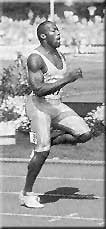
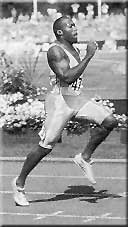
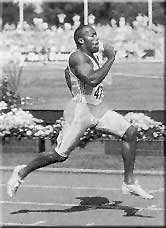
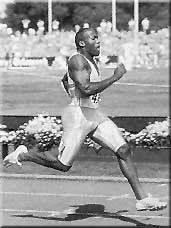
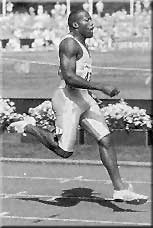
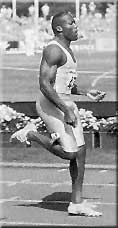
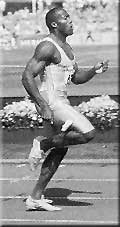
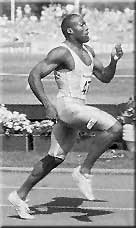
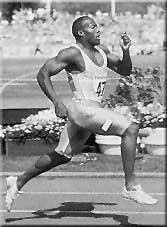
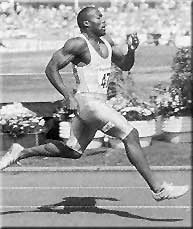
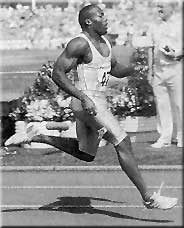
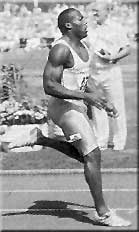
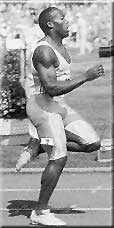
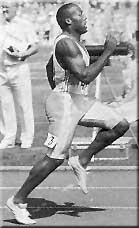
The photo sequence was taken during a heat of the 200 metres in the A.A.A. Championships in 1990. Physically, it can be seen that John Regis is well prepared, especially in the area often neglected by sprinters and their coaches, the trunk and the shoulders.
His running is relaxed and smooth, with no tension in the upper body. The trunk carriage is upright. Tension usually increases in a close-run final where sprinters are under attack from others, but athletes must try to prevent this from happening.
John's shoulders are fixed throughout the sequence, with little lateral movement. The arms travel through a good range. The backward drive of each elbow is evident and compliments the drive of the opposite leg.
Although it cannot be seen in the photo sequence, leg movement is quick and light. Each knee almost reaches a hip height, achieving the good "high knees" position all sprinters look for. The leg drive, the all-important active aspect of the sequence of the leg cycle, is excellent. Coaches and athletes must understand that this develops from all preparation aspects, not just technique practices. The development of speed, strength, mobility and stamina all play their part in producing the ultimate technique.
 1 |
 2 |
 3 |
 4 |
 5 |
 6 |
 7 |
 8 |
 9 |
 10 |
 11 |
 12 |
 13 |
 14 |
Page Reference
If you quote information from this page in your work, then the reference for this page is:
- MACKENZIE, B. (2001) Sprint Photo Sequence [WWW] Available from: https://www.brianmac.co.uk/sprints/sprintseq.htm [Accessed