

High Intensity Plyometrics
The information on this page has been provided by Les Archer, who has used these High-Intensity Plyometrics exercises with many jumpers, hurdles and sprinters with great success. He is a track and field coach in South Africa with experience from schools to the Olympics, specialising in sprints and long jumps. Les is also the current strength and conditioning coach for the Golden Lions Rugby Union in South Africa.
High-intensity plyometrics (HIP) is for the more advanced athletes and should only be conducted once you have been exposed to basic plyometrics for some time. It is well-known that vast forces are placed on the joints, muscles and bone structure with plyometrics and even more so with HIP.
The major muscles worked when performing these exercises are Gluteus maximus, Quadriceps, Tensor fasciae latae, Gastrocnemius and Soleus
Warm-Up
Conduct the following exercises over a distance of 15 to 20 metres:
- Marching - focus on the proper biomechanics of the arms, legs and feet.
- Jogging - high knees, butt kicks, toe jogging.
- Skipping - mimics the quick take-off and landing.
- Lunges.
- Ankle hops and small jumps.
Start position
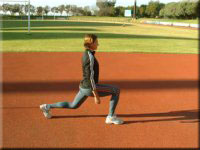
Most of these exercises start in the lunge position. Ensure your upper body stays in the upright position and ensure you have good core stability before attempting these jumps. As a precaution, I recommend that the front knee not move forward beyond the toes, as this will apply extreme force to the knee joint and ligaments. |
 |
Lunge jumps with a twist.
Start in a standard lunge position but move the arms (elbow extended) and hands to a position in front of the body (Figure 1) and then to the side of the leading leg (Figure 2). Upon jumping up, change the leading leg and the arm accordingly. It is an excellent exercise to help develop explosiveness and core stability. The twist can be executed with dumbbells or with a medicine ball. Do 2 to 4 sets of 4 of 6 repetitions.
 Figure 1 |
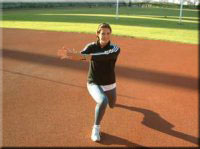 Figure 2 |
Lunge jump with enhanced hip flexion and extension
Start in the lunge position. Jump up, once in the air, bring the front knee further up and extend the back leg even more. Before landing, bring the legs back into the starting lunge position. On landing, immediately explode into the next repetition. Do 2 to 4 sets of 4 of 6 repetitions. Do one set with the right leg forward and then repeat with the left leg forward.
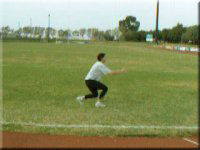 Figure 1 |
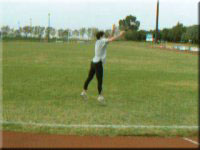 Figure 2 |
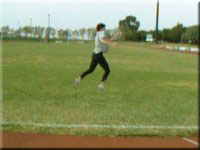 Figure 3 |
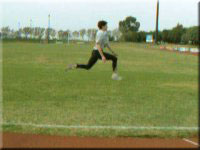 Figure 4 |
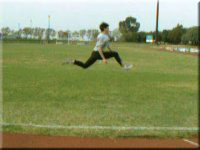 Figure 5 |
Figure 6 |
Lunge jump landing with alternating legs in front
Start in the lunge jump position. Jump up as high as possible, but once in the air, alternate the legs, so the back leg becomes the front landing leg. On landing, immediately explode into the next repetition. Do 2 to 4 sets of 4 of 6 repetitions. Do one set with the right leg forward and then repeat with the left leg forward.
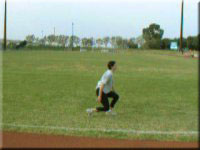 Figure 1 |
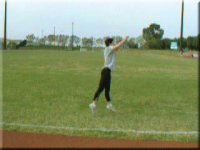 Figure 2 |
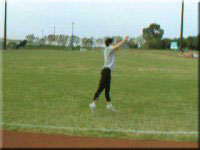 Figure 3 |
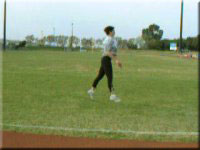 Figure 4 |
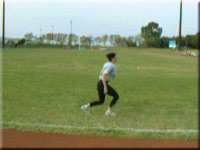 Figure 5 |
You can place your hands on your hips to make this more difficult.
Lunge cycle jump
Start the same as above mentioned. Once in the air, do a hip flexion with the back leg (so it becomes the front leg) and knee flexion with the now back leg. However, before landing, return the legs to the starting position. On landing, immediately explode into the next repetition. Do 2 to 4 sets of 4 of 6 repetitions. Do one set with the right leg forward and then repeat with the left leg forward.
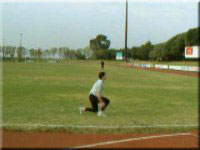 Figure 1 |
 Figure 2 |
 Figure 3 |
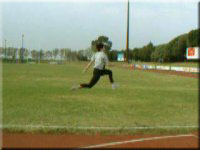 Figure 4 |
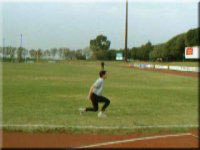 Figure 5 |
Highland swing
This jump starts by standing with your feet next to one another. Bend your knees, jump up as high as possible, perform a hip flexion with one leg and bend the back-leg knee. Before landing, bring the feet next to one another. With the next jump-up, alternate the legs. On landing, immediately explode into the next repetition. Do 2 to 4 sets of 4 to 6 repetitions. Do one set with the right leg forward and repeat with the left leg forward.
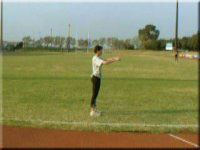 Figure 1 |
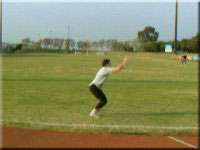 Figure 2 |
 Figure 3 |
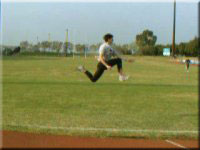 Figure 4 |
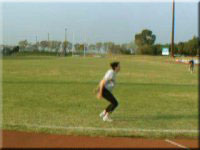 Figure 5 |
Page Reference
If you quote information from this page in your work, then the reference for this page is:
- MACKENZIE, B. (2004) High Intensity Plyometrics [WWW] Available from: https://www.brianmac.co.uk/plymohip.htm [Accessed