

How to ensure your athletes eat healthily
Brian Mackenzie explains how to determine your nutritional requirements.
Food provides nutrients to help the body function properly. No single food contains them all in the amounts needed, so a mixture of foods has to be eaten. Food is broken down into food groups of which there are five commonly accepted ones:
- Bread, cereals, and potatoes
- Fruit and vegetables
- Milk and dairy foods
- Meat, fish, and alternatives
- Fatty and sugary foods
To get a wide range of nutrients the body needs to remain healthy, it is important to choose a variety of foods from the first four groups every day. Foods in the fifth group (fatty and sugary foods) are not essential to a healthy diet but add extra choice and taste. The proportion of each food group in the diet is shown by the different areas occupied by each of the food groups on the plate in the picture below.
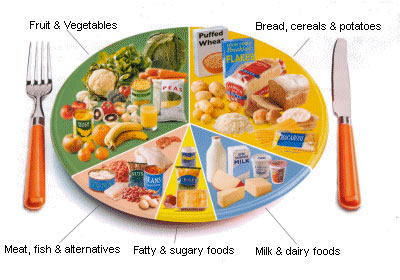
This guide does not apply to children under the age of five, and if you are under medical supervision or with special dietary needs, you should check with your doctor to be clear if this guide applies to you.
Bread, other cereals, and potatoes 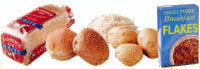
| Includes | Other cereals mean things like breakfast cereals, pasta, rice, oats, noodles, maize, millet, and cornmeal. Beans and pulses can be eaten as part of this group. |
| Nutrients | Carbohydrates (starch), Fibre, some calcium and iron, B Vitamins |
| How much | Eat lots |
| Try to eat | Wholemeal, wholegrain, brown, or high fibre versions where possible |
| Try to avoid | Having them fried too often (e.g. chips) Adding too much fat (e.g. thickly spread butter or margarine on bread) Adding rich sauces and dressings (e.g. cream or cheese sauce on pasta) |
Fruit & Vegetables 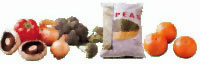
| Includes | Fresh, frozen, and canned fruit and vegetables and dried fruit. A glass of fruit juice can also contribute. Beans and pulses can be eaten as part of this group. |
| Nutrients | Vitamin C, Carotenes, Folates, Fibre, and some carbohydrate |
| How much | Eat lots. |
| Try to eat | A wide variety of fruit and vegetables. |
| Try to avoid | Adding fat or rich sauces to vegetables (e.g.
carrots glazed with butter, roast parsnips) Adding sugar or a syrupy dressing to fruit (e.g. stewed apple with sugar) |
Milk & dairy foods 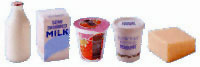
| Includes | Milk, cheese, yoghurt, and fromage frais. This group does not include butter, eggs, and cream. |
| Nutrients | Calcium Protein, Vitamin B12, Vitamins A, and D |
| How much | Moderate amounts and choose lower-fat versions whenever you can. |
| Try to eat | Lower fat versions mean semi-skimmed or skimmed
milk, low fat (0.1% fat) yoghurts or fromage frais, and lower fat cheeses (e.g.
Edam, Half-fat Cheddar, Camembert). Check the amount of fat by looking at the nutrient information on the labels. Compare similar products and choose the lowest - for example, 8% fat fromage frais may be labelled low fat but is not the lowest available. |
Meat, fish, and alternatives
| Includes | Meat, poultry, fish, eggs, nuts, beans, and
pulses. Meat includes bacon and salami and meat products such as sausages,
beef burgers, and pate. These are all relatively high-fat choices. Beans, such as canned baked beans and pulses are in this group. Fish includes frozen and canned fish such as sardines and tuna, fish fingers, and fish cakes. |
| Nutrients | Iron, Protein, B Vitamins - especially B12, Zinc, and Magnesium |
| How much | Eat moderate amounts and choose lower-fat versions whenever you can. |
| Try to eat | Lower-fat versions mean things like meat with
the fat cut off, poultry without the skin, and fish without batter. Cook these foods without added fat. Beans and pulses are good alternatives to meat as they are naturally very low in fat. |
Fatty and sugary foods 
| Includes | Margarine, low fat spread, butter, other spreading fats, cooking oils, oily salad dressings or mayonnaise, cream, chocolate, crisps, biscuits, pastries, cake, puddings, ice- cream, rich sauces, and fatty gravies, sweets, and sugar. |
| Nutrients | Some vitamins and essential fatty acids but also a lot of fat, sugar, and salt |
| How much | Eat fatty and sugary foods sparingly - that is, infrequently and/or in small amounts. |
| Try to eat | Some foods from this group will be eaten every
day, but should be kept to small amounts, for example; margarine, low fat
spread, butter, other spreading fats, cooking oils, oily salad dressings, or
mayonnaise. Other foods from this group are occasional foods, for example; cream, chocolate, crisps, biscuits, pastries, cake, puddings, ice cream, rich sauces, fatty gravies, sweets, and sugar. |
How much do we need?
People differ in the number of calories they require each day, and that is what affects the amount of food, in total, that individuals should eat. However, much as people need, the proportions of food from the different groups should remain the same.
The factors that affect people's daily energy requirements are:
- Gender - women tend to need fewer calories than men
- Age - older adults need fewer calories than adolescents and young adults
- Overweight - being heavier than their ideal weight means fewer calories are required to achieve a healthy weight
- Physically active - the more active a person is, the greater their calorie needs
Vitamin and mineral supplements
Vitamin and mineral supplements cannot replace good eating habits. Most people can get all the nutrients their body needs by choosing a variety of foods, in the proportions shown, from the five food groups.
Some people may need certain supplements. Women who are already, or planning to become pregnant need folic acid, and, may need extra iron. Older adults may need additional Vitamin D or iron. People should consult a doctor or dietitian if they think they need to take a vitamin or mineral supplement.
Article Reference
This article first appeared in:
- MACKENZIE, B. (2003) How to ensure your athletes eat healthily. Brian Mackenzie's Successful Coaching, (ISSN 1745-7513/ 6 / October), p. 8-9
Page Reference
If you quote information from this page in your work, then the reference for this page is:
- MACKENZIE, B. (2003) How to ensure your athletes eat healthily [WWW] Available from: https://www.brianmac.co.uk/articles/scni6a6.htm [Accessed
About the Author
Brian Mackenzie is a British Athletics level 4 performance coach and a coach tutor/assessor. He has been coaching sprint, middle distance, and combined event athletes for the past 30+ years and has 45+ years of experience as an endurance athlete.